In today’s digital music production world, precision often comes at the cost of expression. Quantization may tighten your timing—but it can also strip away the subtle human feel that makes music truly alive.
That’s exactly the problem Symbolic Music Synchrony aims to solve.
A New Way to Capture Musical Expression
Synchrony is a performance encoder designed for composers, producers, and musicians who want their music to move naturally. Instead of forcing performances into rigid grids, it extracts a tempo map directly from your playing, preserving every nuance of timing and dynamics.
This means your original performance becomes the foundation for your entire arrangement—keeping the emotion intact while allowing full flexibility in production.
Why It Stands Out
What makes Synchrony powerful is its ability to bridge the gap between human performance and digital workflows:
🎹 Preserves interpretation – Your expressive timing drives the session, not the other way around.
⚡ Automates tedious work – Generates tempo maps instantly, saving hours of manual editing.
🎼 Keeps everything in sync – Every instrument follows the same expressive tempo map.
🎧 Maintains clean MIDI – Expression is stored separately, keeping your data editable and notation-ready.
Built for Modern Composers
From film scoring to orchestral mockups, Synchrony is designed for complex, expressive music. It even allows note-by-note alignment between a performance and a score—giving you full control when you need it.
Behind the scenes, the software is grounded in advanced research in musical performance analysis, bringing academic innovation directly into real-world workflows.
Final Thoughts
If you’ve ever felt the frustration of choosing between musical feel and technical precision, Synchrony offers a compelling alternative. It doesn’t just help you produce music—it helps you preserve the soul of your performance.
When it comes to live performances, precision and timing are everything. That’s where QLab comes in—a powerful, cue-based software designed to seamlessly control audio, video, and lighting during live events.
Developed by Figure 53, QLab has become an industry standard in theatre, live productions, installations, and even corporate events. Its core strength lies in its intuitive “cue” system, allowing users to program and trigger everything—from sound effects and music to projections and lighting changes—with perfect timing.
What makes QLab stand out is its flexibility. Whether you’re running a small performance or a complex multimedia production, you can build detailed sequences using grouped cues, automation, and integrations with external devices like MIDI controllers or lighting systems.
Another major advantage is accessibility. QLab offers a free version with essential playback features, while advanced capabilities—like multi-output audio, video mapping, and lighting control—are available through scalable licensing options.
In short, QLab simplifies the technical side of live production, empowering creators to focus on storytelling and performance rather than logistics. Whether you’re a theatre professional or a creative technologist, it’s a tool that can elevate any live experience.
If you’ve ever stared at a blank DAW screen, waiting for the perfect beat to hit you, you know the struggle of “producer’s block.” Rhythm is the heartbeat of any track, but crafting a professional, genre-perfect drum loop from scratch can take hours of tedious clicking.
Enter Unison Drum Monkey.
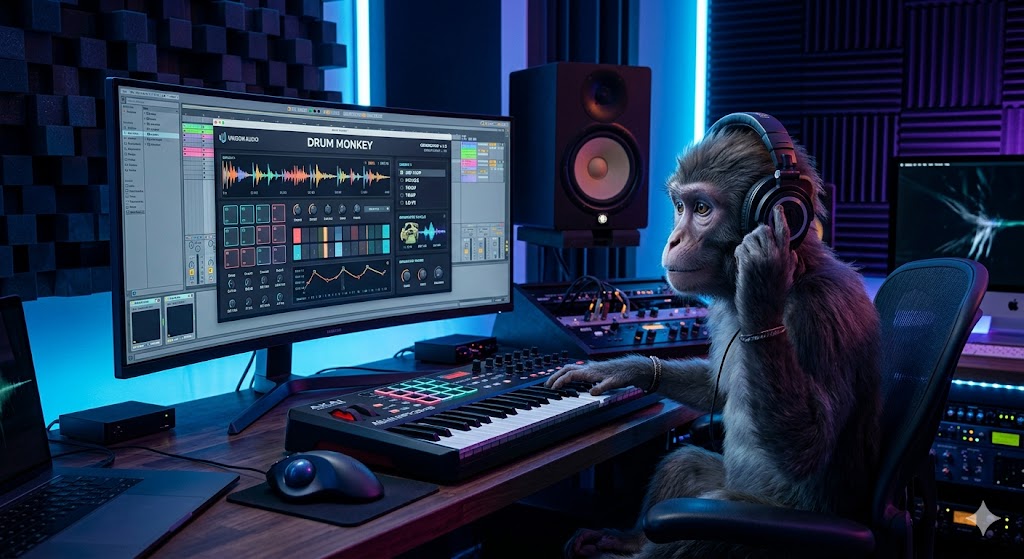
Drum Monkey is the world’s first genre-specific drum loop generator powered by AI. Whether you’re producing Hip Hop, House, Pop, or even Country, this plugin allows you to generate radio-ready drum loops with a single click.
Why it’s a must-have for your studio:
30 Genres at Your Fingertips: From Lo-Fi to Dubstep, the AI has analyzed thousands of hit songs to understand the “secret sauce” of every style.
Infinite Inspiration: Never get stuck again. Click the “Monkey” button to instantly hear a fresh, unique pattern tailored to your track.
Total Control: It’s not just about “random loops.” You can drag and drop MIDI or Audio directly into your DAW, swap out samples from the 3,000+ built-in library, or use your own sounds.
Workflow Speed: Finish more music in half the time by getting the foundational groove right in seconds.
Currently, Unison is offering a special deal where you can grab Drum Monkey for 75% off, plus a bundle of exclusive bonuses (including MIDI packs and bass loops). If you’re ready to stop “tweaking” and start “finishing,” this is the tool you’ve been waiting for.
If you’ve ever felt like your hardware synthesizers have more potential than your hands can keep up with, you need to check out Condukt.
Condukt isn’t just another MIDI utility; it’s a performance-focused powerhouse for iOS and Mac that turns your device into a custom control surface. Whether you’re a bedroom producer or a live performer, Condukt bridges the gap between the tactile feel of hardware and the infinite flexibility of software.
What makes Condukt a game-changer?
Custom Control Boards: Forget digging through confusing menus or memorizing CC numbers. You can drop faders onto a custom board, map them to your synth’s parameters (like filter cutoff or oscillator pitch), and start playing instantly.
Scene Memory (Recalls): This is where the magic happens. You can save “Snapshots” of your fader positions. Want your lead sound to morph into a distorted bass over exactly four beats? Tap a Recall button and watch Condukt smoothly transition all your settings in perfect sync.
Multi-Device Mastery: Why control one synth when you can control them all? A single fader in Condukt can be mapped to multiple devices. Imagine opening the filters on three different synths simultaneously with one swipe.
LFOs & Sequencers: Add functionality your hardware doesn’t have. Condukt includes built-in LFOs and generative sequencers (like the Turing Machine module) to add movement and complexity to your sounds.
Plug and Play: It works with hundreds of synths out of the box—from Elektron and Arturia to Moog and Roland—thanks to its integration with the open-source midi.guide database.
The Bottom Line
Condukt takes the “headaches” out of MIDI and replaces them with pure performance. It’s designed by synth enthusiasts who want to spend less time programming and more time playing.
Ready to level up your live sets? Check out the full guide and get started at condukt.app.
If you’re looking for a powerful yet intuitive MIDI sequencing tool, Orch delivers a streamlined workflow built specifically for modern music producers. Designed with performance and flexibility in mind, Orch makes it easy to create dynamic patterns, experiment with musical ideas, and control external hardware or plugins in real time.
What Is Orch?
Orch is a real-time MIDI sequencer that allows producers to build evolving patterns, trigger clips, and manipulate MIDI data with precision. It’s built for musicians who want hands-on control over their compositions without getting lost in overly complex interfaces.
Whether you’re producing electronic music, scoring, or experimenting with modular setups, Orch provides a clean environment to design and perform MIDI sequences efficiently.
How Orch Works
Orch is structured around tracks and patterns. Users can:
Create and edit MIDI sequences visually
Trigger and arrange clips in real time
Route MIDI to external gear or software instruments
Manipulate timing, velocity, and performance data
Its interface focuses on clarity and responsiveness, making it suitable for both studio production and live performance setups.
Key Features
Real-time MIDI sequencing
Pattern-based workflow
Flexible MIDI routing
Hardware and software compatibility
Clean, performance-oriented interface
The tool emphasizes creative flow — helping producers move from idea to execution without friction.
Why Producers Will Love It
Orch stands out because it bridges structure and experimentation. It provides enough control for detailed sequencing while remaining intuitive enough to encourage spontaneous creativity.
If you work with MIDI extensively and want a flexible system that enhances — rather than interrupts — your workflow, Orch is worth exploring.
Mixing a full orchestra is one of the most daunting tasks for any composer. Between balancing frequencies, carving out space for woodwinds, and ensuring the percussion doesn’t wash out the strings, it’s easy to get lost in a “muddy” mix.
Enter the Orchestral Mixing Advisor by Kamil Rzeczkowski—a lightweight, browser-based tool designed to take the guesswork out of cinematic production.
Why It’s a Game Changer
Unlike complex plugins that require heavy CPU or long installations, this tool is an interactive assistant that lives in your browser. It provides instant, visual guidance based on professional mixing practices.
Key Features:
Orchestral EQ Advisor: Get specific frequency suggestions for every section of the orchestra. It identifies “problem zones” and tells you exactly where to boost for clarity or cut to remove harshness.
Pan & Reverb Placement: Creating a realistic “stage” is hard. This tool provides recommended stereo positions and reverb depth levels to help you achieve a natural, wide orchestral image.
No-Friction Workflow: No login, no ads, and no installation. It’s designed to be a quick-reference guide that stays open while you work in your DAW (Cubase, Logic, Ableton, etc.).
Whether you are a student just starting with MIDI mockups or a professional film composer looking to speed up your workflow, the Orchestral Mixing Advisor is a must-have in your digital toolkit. The best part? It’s currently available for free.
If you’re a music producer, you know the drill: You get a shiny new Mac, you’re excited to start a fresh project, and then the reality hits. You have to spend the next eight hours digging through old emails for license keys, downloading dozens of individual installers, and praying your iLok doesn’t throw a tantrum.
Enter Plugin Station—the first comprehensive plugin manager built by a technical support professional who has actually seen (and fixed) it all.
What is Plugin Station?
Plugin Station isn’t just another folder scanner; it’s a centralized hub for your entire audio ecosystem. Designed specifically for macOS, it acts as a “mission control” for your VST, AU, and AAX plugins. Whether you are dealing with one laptop or a multi-room studio, it’s built to take the “work” out of your workflow.
Why Every Producer Needs It:
The Ultimate License Key Manager: Stop searching your inbox. Store all your license keys in one secure place, encrypted with Apple’s Keychain and synced via iCloud. It even supports Touch ID for quick access.
System Profiling: Moving to a new computer? Plugin Station takes a “snapshot” of your current setup. With one click, you can find the official installers for everything you had on your old machine.
Storage Cleanup: Are you wasting GBs of space on AAX files even though you don’t use Pro Tools? The Storage Manager identifies unneeded formats and helps you reclaim your hard drive.
Troubleshooting & Support: If a plugin crashes, Plugin Station offers built-in troubleshooting suggestions. If those don’t work, it can generate a detailed technical report to send to the manufacturer, getting you back to making music faster.
iLok RMA Assistance: We’ve all been there—your iLok breaks and your licenses are trapped. Plugin Station provides dedicated assistance to navigate the RMA process and get your licenses restored.
The Bottom Line
Music production should be about creativity, not file management. Plugin Station handles the “digital housekeeping” so you can get back to the mix.
Ready to clean up your session? You can try Plugin Station for free for 7 days. Head over to pluginstation.app to download the app and see how much time you can save.
*** Plugin Station is currently available for macOS (Ventura and later) with support for both Intel and Apple Silicon.
SnappySnap is an innovative plugin host designed for musicians and producers to enhance their existing VST3 and AU instruments and effects. By acting as a control layer, it allows users to capture 12 distinct snapshots of a plugin’s state and seamlessly morph between them using an XY pad or a linear fader. The software features advanced randomization and breeding tools that utilize genetic algorithms to generate entirely new presets from existing settings. Beyond manual control, it includes an autonomous drift mode and physics-based elasticity to create organic, evolving textures that are difficult to achieve with standard automation. Notably, it is the first audio tool to integrate AI connectivity via the Model Context Protocol, enabling conversational sound design and intelligent parameter manipulation. This comprehensive meta-preset manager unifies workflow across different plugins while offering deep MIDI integration for live performance.
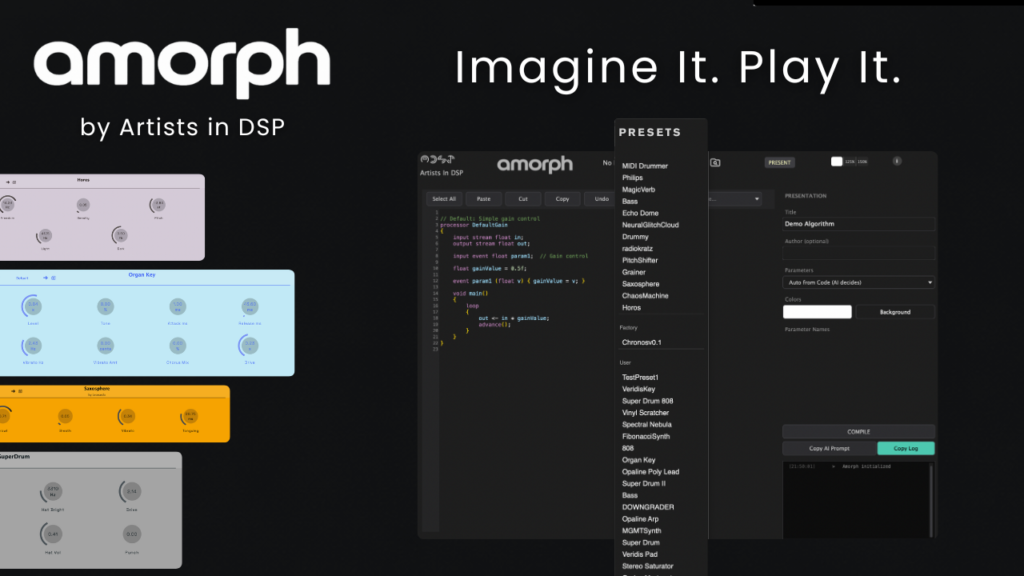
Imagine a single audio plugin that isn’t static, but can instead transform into any audio effect or MIDI instrument you can describe. Traditionally, software developers spend months coding a single reverb or synthesizer, but Amorph, a new tool from Artists in DSP, changes the cycle by allowing users to generate functional DSP code in minutes.
How It Works: From Idea to Instrument
Unlike hardware platforms that offer similar prompt systems, Amorph is built for VST3, bringing this technology directly into your DAW with support for deep automation and session recall. The plugin operates in two distinct modes: a standard plugin view and a “Lab Mode,” which acts as a workshop and code editor.
To create a new tool, you don’t need to be a programmer. The workflow is straightforward:
1. Generate a Prompt: Click a button in Amorph to copy a ready-to-use prompt containing specific rules and parameter maps.
2. Use an LLM: Paste that prompt into a language model like ChatGPT, Claude, or Gemini and describe the instrument or effect you want (e.g., “a warm arpeggiated poly-synth”).
3. Compile: Paste the resulting code back into Amorph and hit compile. The plugin uses a controlled DSP sandbox to safely swap algorithms in milliseconds without crashing your DAW.
Key Features and Capabilities
Amorph uses C major, a specialized DSP language designed for audio. This allows for a wide range of creations, from simple filters to complex MIDI instruments and weird hybrid effects.
• Dynamic Presets: You can save entire algorithms as presets, essentially building a personal rack of custom synths and effects within a single plugin.
• Iterative Refinement: If the AI generates code with an error, you can simply copy the error from Amorph’s logger, paste it back into the AI for a fix, and re-compile.
• Community Focused: For those who prefer not to use AI, Amorph supports community-shared presets, allowing users to explore and tweak what others have built.
Limitations and Future Development
While powerful, Amorph currently focuses on sound over aesthetics. The user interface is limited to simple knobs and readouts rather than fancy graphics. Additionally, it is designed for digital signal processing (synthesis, modulations, and time-based effects) rather than loading massive sample libraries or running machine learning models.
Open Beta and Pricing
In an effort to avoid limiting creativity, the team at Artists in DSP is releasing Amorph for free. The project is currently moving into an open beta, inviting musicians and creators to see how far they can push the boundaries of prompt-based audio software
The NAMM 2026 trade show highlights a diverse range of music technology and hardware designed for modern creators. Industry leaders like Microsoft and the MIDI Association are advancing connectivity standards with MIDI 2.0 and network-based solutions to streamline studio workflows. Innovative instruments are featured prominently, including Mellotron’s tape-based digital units, Polyend’s multi-engine synthesizers, and Panova’s hybrid pianos that utilize physical soundboards. The exhibition also showcases AI-driven software for instant sheet music transcription, stem separation, and immersive 3D spatial reverb powered by GPU processing. Additionally, niche inventions like plant-based sound generators and glass-panel speakers demonstrate a push toward non-traditional materials in audio design. Seamless remote collaboration tools and portable composition devices further reflect the show’s focus on accessible, high-tech production.
Top Innovations from NAMM 2026
The NAMM Show 2026 featured a diverse array of hardware, software, and experimental music technology.
Mellotron Digital Line: Includes the Rack unit, Mini, Micro, and Micro module, all featuring 100 built-in sounds from the original Master Tape library. The M4000D series offers expansion cards and models with wooden keys featuring polyphonic aftertouch.
Hamilton Metalcraft: A Pasadena-based precision shop providing custom sheet metal enclosures, rack units, and guitar pedal cases for other manufacturers.
Polyend Synth: A multi-engine polyphonic synthesizer retailing for $799 that can run three of its ten available engines simultaneously. It features a “smart grid” to sync multiple engines to a single chord progression.
Orchestral Art Live: The first fully implemented MIDI 2.0 compatible orchestra, allowing users to switch articulations directly through MIDI notes.
Windows 11 MIDI 2.0: Microsoft’s new Windows MIDI service includes multi-client support, virtual MIDI, and network MIDI 2.0 previews.
BomeBox (Bome Software): A new version of the MIDI connection box featuring four MIDI DIN ports, dual USB, Wi-Fi, and USBC power. It supports the new low-latency Network MIDI 2.0 standard over Ethernet.
Amino Inductive Technology: Keyboard sensing technology that uses inductive metal tracking instead of traditional switches to measure key position through the entire stroke.
Cinido ProductsLive streaming interface: A portable device for iPhone with Bluetooth and built-in effects.
JM Tools Modular Environment: A $250 sound design plugin for Mac and Windows that allows users to chain and morph between modular filter snapshots.
Modern Biology Pocket Scion: A handheld device that translates the electrical properties of plants and mushrooms into sound or raw data for DAWs.
Anakari Physics Synth: A 3D physics modeling synthesizer where instruments are built by connecting objects in a virtual space. It functions as both a standalone app and a VST/AU plugin.
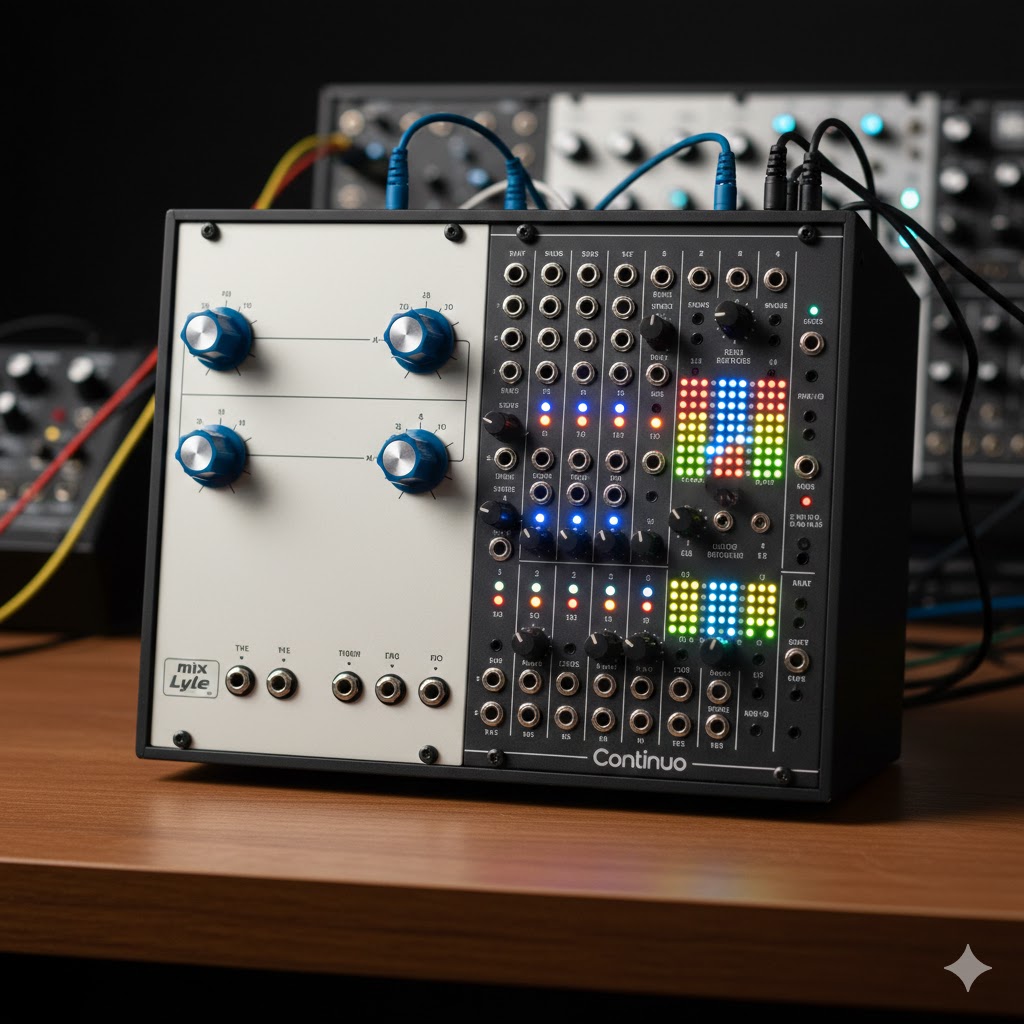
The Lyle: A modern modularized Oberheim 4-voice available in a “vanilla” single-voice package.
The Continuo: A polyphonic arpeggiator and sequencer compatible with MIDI or CV/Gate.
Battery Stand: A new stand featuring a built-in battery base to power iPads on stage for extra hours.
Soundbridge DAW: A complete DAW for Mac and PC that now supports intercontinental zero-latency virtual collaboration, allowing producers to remote-control a musician’s DAW.
Alphatheta ChordCat: A $329 portable composition tool with a “Chord Cruiser” mode that suggests candidate chords for progressions.
MusicRoTrip App: A free mobile app for discovering live music venues, record stores, and historical music sites across the U.S.
Latency Fix Plugin: A remote recording tool that automatically aligns audio sessions by measuring internet latency in real-time.
GlassSonic Speakers: A 2.1 home audio set using 12mm tempered glass panels as transducers to generate sound and synchronous light effects.
Clang.io: An AI-driven service that transcribes audio or YouTube videos into sheet music for $10 a month.
BlackBT Susex Smart Pedal: A $299 pedal that senses foot position to morph between sustain, expression (CC), and note triggers.
Panova Hybrid Pianos: Pianos that combine digital engines with real wood soundboards and individually weighted key segments to emulate acoustic instruments.
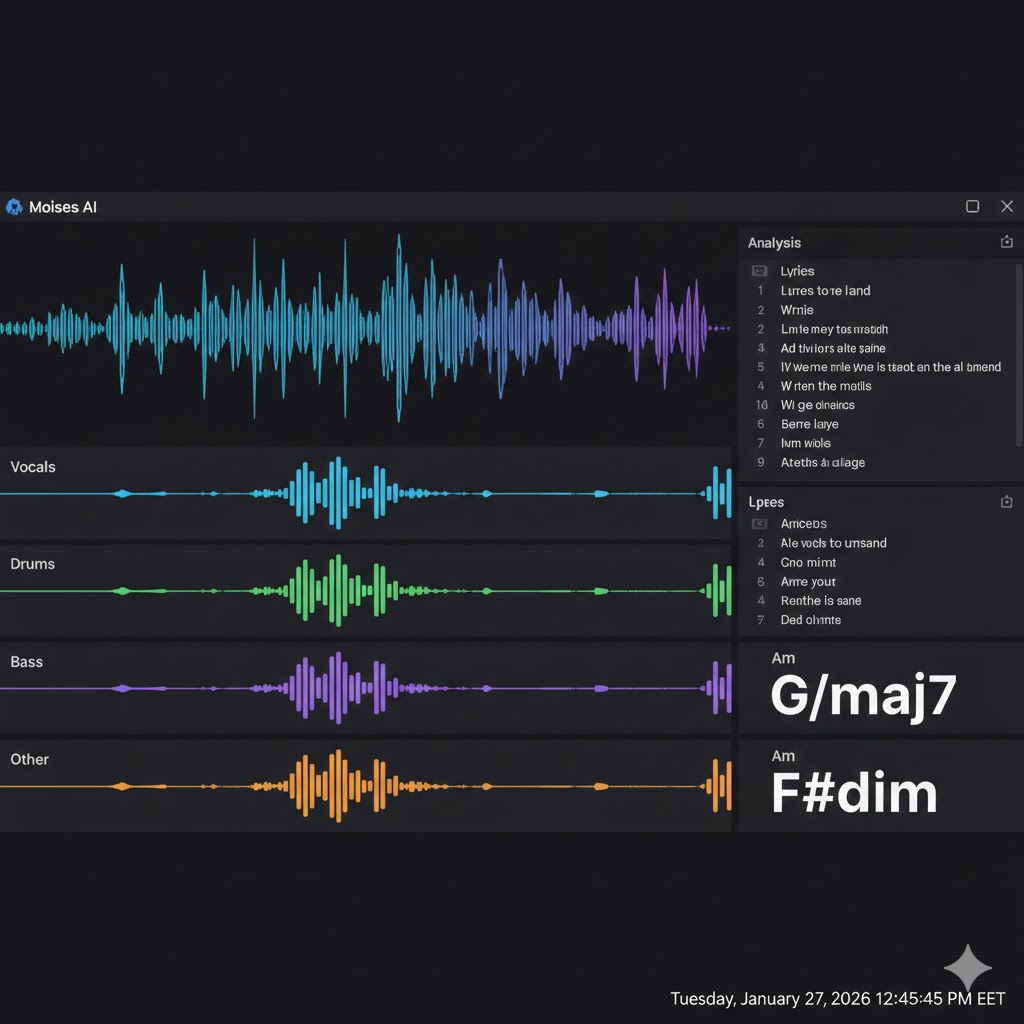
Moises AI Toolkit: A subscription service ($30/month) providing high-fidelity stem separation, lyric transcription, and chord detection.
Mntra Living Sky: A $599 GPU-powered spatial reverb capable of running 540 impulse responses simultaneously with a 3D interface.
Isovox Pro: A professional vocal booth featuring Reference Acoustic Gills (ROS) and an active silent ventilation system.